Classes | Seal of Biliteracy | Activities | CHI-PAC Support | FAQ
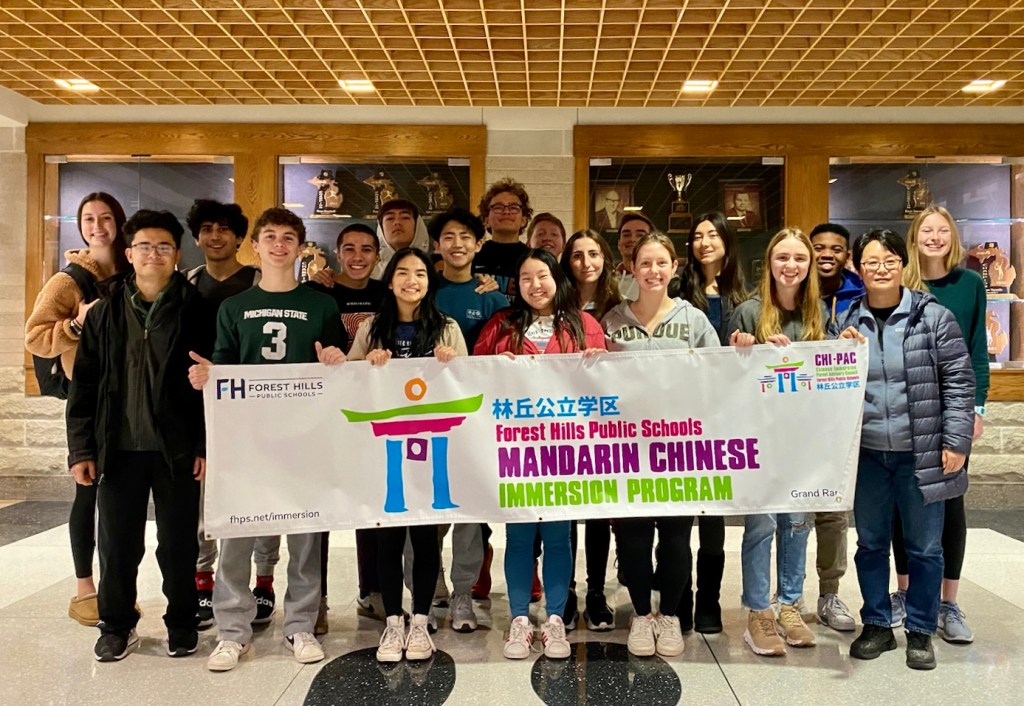
Northern High School Chinese Immersion students take college-level classes through a dual enrollment partnership with Western Michigan University. Students may earn up to 28 college credits from WMU, which qualifies them to receive a Chinese minor if they attend WMU for college.
Heather McKinney-Rewa is the principal at Forest Hills Northern High School. WMU’s Professor Ward and Professor Fang teach classes at Forest Hills Northern.
Classes
These courses are part of the Chinese program at Western Michigan University. These class descriptions come from the WMU Course Catalogue.
9th Grade
- CHIN 1010 Basic Chinese II (Continuation of CHIN 1000: Fundamentals of Chinese): Background and practice in listening comprehension, speaking, reading and writing. (4 credits)
- CHIN 2800 Chinese Calligraphy: Introduction to the history of Chinese calligraphy and a theoretical framework for recognition of the aesthetic qualities of the brushwork. A series of practice sessions will be held to facilitate a hands-on learning process for the lay person on major scripts. Taught in English, with translation for Chinese characters, can count toward minor in Chinese. This course satisfies WMU Essential Studies Level 2: Exploration and Discovery – Artistic Theory and Practice Category. (3 credits)
10th Grade
- CHIN 2000 – Intermediate Chinese I: The development of spoken and written expression in Chinese. Review of fundamental grammar and skills. (4 credits)
- CHIN 2100 – Business Chinese: This course is designed to introduce students to various aspects of Chinese business culture and to provide basic business Chinese training. By linking the relationship between business culture and business language, this course will equip students with basic language skills and knowledge to do business in Chinese-speaking countries and areas or with Chinese companies. Topics such as the following will be studied: the first business meeting; business negotiation; business connection; signing a contract; shipping and handling; and foreign trade corporations. We will emphasize communicative activities and combine the language training with the introduction of Chinese business culture. Although students have different language background, all students are required to make a good faith effort to speak the target language at every relevant opportunity. It is our goal to use as much Chinese as possible while participating in this program. By the end of the course, students should be able to actively participate in basic business conversations. (3 credits)
11th Grade
- CHIN 2010 – Intermediate Chinese II: The continued development of spoken and written expression in Chinese. Readings and discussions of civilization and culture materials. (4 credits)
- CHIN 2750 – Chinese Life and Culture: This course is an introduction to Chinese society, culture and history. The course is designed to increase students’ foundational knowledge of the social sciences, humanities and the arts of China, with the ability to apply key concepts beyond the course content (in other words, beyond the context of East Asia). This class will examine high points of Chinese culture and history while critically analyzing its cultural production (writing, art, film, etc.). Meanwhile, the class will repeatedly return to key themes that apply also outside the Chinese context. These may include factors that accelerate or slow down cultural development, the ways that cultures hybridize and change as the result of intercultural exchange, the ways that events on the world stage shape the life and culture of people at the individual level, and the ways that cultures and nations react during times of crisis. This course satisfies WMU Essential Studies Level 2: Exploration and Discovery – Societies and Cultures Category. (3 credits)
12th Grade
- CHIN 3160 – Chinese Composition: Advanced study of composition in Chinese. Emphasis is upon increasing the student’s command of written Chinese. Chinese characters competency and basic skills of using Chinese word processors are reinforced. (3 credits)
- CHIN 3170 – Chinese Conversation: Advanced study of conversation in Chinese. Students practice spoken Chinese through role-playing, the viewing of films, discussion and other oral activities. Emphasis on both listening and speaking of the language. (4 credits)
Chinese Immersion students who go on to attend WMU for college are able to skip WMU’s CHIN 1000: Chinese I because of their proficiency level coming into high school. This class gives students an additional 4 credits on top of the 28 credits earned through the FHN/WMU dual enrollment program.
Michigan Seal of Biliteracy
The Seal of Biliteracy is an award earned by graduating seniors from the Michigan Department of Education in recognition of attaining Mandarin language proficiency requirements.
Starting in their junior year, Chinese Immersion students can qualify to earn the Seal of Biliteracy in Mandarin by taking the STAMP Avant Assessment 4S test and earning at least a 6 (intermediate high) on all four test components (reading, writing, listening, speaking). However, the official transcript will not reflect that the Seal of Biliteracy has been earned until after high school graduation because Michigan law states the Seal of Biliteracy can only be granted after all graduation requirements in English language arts have been met.
FHPS will apply for the Seal of Biliteracy on behalf of students who have earned qualifying STAMP 4S scores. However, the district will only apply on behalf of students who fill out the SOBL Application Google Form.
Current seniors who have already earned qualifying STAMP 4S scores from testing last spring are required to fill out the SOBL Application Google Form. Current seniors who would like to voluntarily take the STAMP 4S test to try to qualify for the Seal of Bilteracy need to register by October 25 to take the November 15, 2024 STAMP 4S test. A $20 fee will be charged.
For more information, including information on retaking individual portions of the test, see pages 3-5 in the STAMP Testing Guidelines for Chinese Immersion students.
Activities
Chinese Club
Chinese Club meets after school on the second Monday of the month. All students are welcome. Students come to relax by playing Chinese card games, doing tai chi, dancing Chinese square dance, jumping rope, kicking the shuttlecock and more.
WMU Speech Competition
A Chinese Speech Contest held annually in March at Western Michigan University provides a stage for Chinese language learners to demonstrate their achievements in learning Chinese and communicate with each other.
There are three categories: Speech Contest, Chinese Knowledge Competition and Talent Show. Each contestant can participate in any category or all three categories. Students who excel in preliminary round will advance to the final round.
- Students who are in 9th and 10th grades at the Kalamazoo Chinese Academy, Forest Hills Northern High School, Greenville High School and Holland Christian High School will be assigned to high school level 3.
- Students who are in 11th and 12th grades at Forest Hills Northern High School will be assigned to high school level 4.
National Chinese Speech Contest
The American Academy of International Culture and Education in collaboration with the Chinese Language Teachers Association holds the annual National Chinese Speech Contest online. All U.S. grades 3-12 and college-level Chinese language learners are invited to participate in the contest. Prizes are awarded to both the winners and their teachers.
Video applications are typically due January-February with contest semi-finals held in March and finals in April.
The goal of the contest is to motivate students in learning Chinese by sharing their individual experiences and to provide a platform for Chinese language learners to showcase their learning through oratory expression.
CHI-PAC Support
CHI-PAC Spirit of Chinese Scholarship
Since 2020, the CHI-PAC “Spirit of Chinese Scholarship” is awarded annually to a student who communicates how learning Mandarin Chinese through the Chinese Immersion program has enriched their life or how they see the language benefiting them in the future.
Applicants must be classified as a senior by the application deadline, August 31 of the start of senior year. Students are asked to communicate in both Mandarin Chinese and English on their written application and during their speech presentation. A $500 cash award will be given to the scholarship recipient.
Previous Scholarship Recipients
- Class of 2021: Catherine Hwang
- Class of 2022: Sophia McGrath
- Class of 2023: Ava Hamilton
- Class of 2024: Celina Du
- Class of 2025: Reagan Kurt
Senior Recognition Celebration
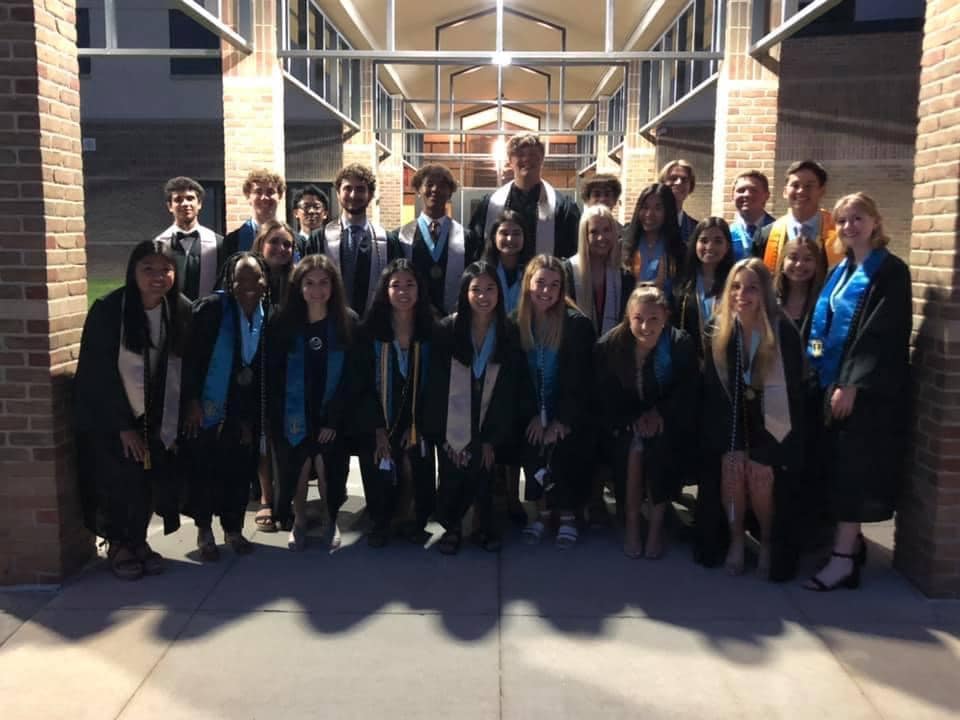
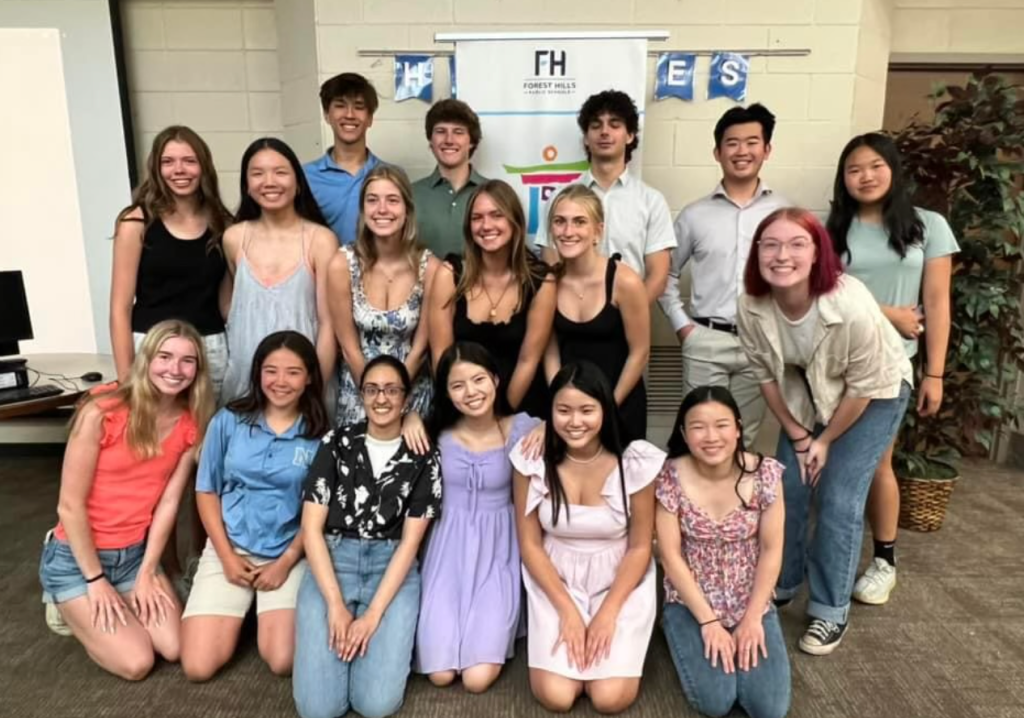
Each year, we celebrate our graduating seniors with a celebration ceremony organized by junior parents. This tradition began when our pioneer senior class graduated in 2021.
CHI-PAC is excited to celebrate the 5th graduating class of our amazing Chinese Immersion program, the Class of 2025! Mark your calendars for the Senior Recognition Celebration at 6 p.m. Wednesday, May 7, 2025 in Forest Hills Northern’s media center. We look forward to recognizing all the hard work and sacrifice of our seniors and their families. More details to come.
Mentorship Program
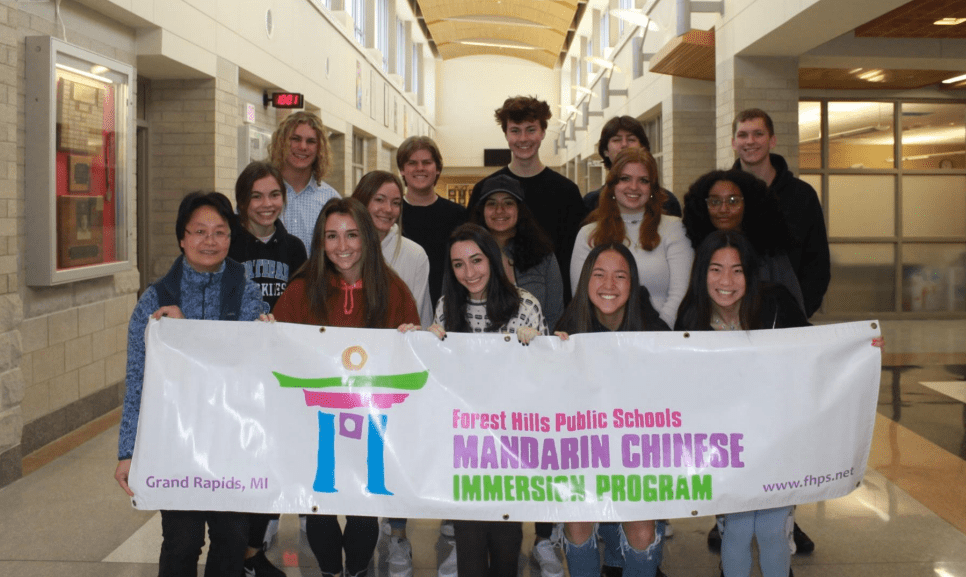
During the 2023-2024 school year, CHI-PAC facilitated a 7-week student-led mentorship program in which Northern High School students mentored 28 students from Meadow Brook Elementary and Northern Trails 5/6 School weekly via Zoom. The sessions provided younger students an opportunity to practice their Mandarin Chinese language skills and get to know high school role models further along in their language-learning journey.
Other CHI-PAC activities at the high school level include:
- Sharing Seal of Biliteracy information and communication
- Supporting the Chinese Club Hot Pot & International Fair
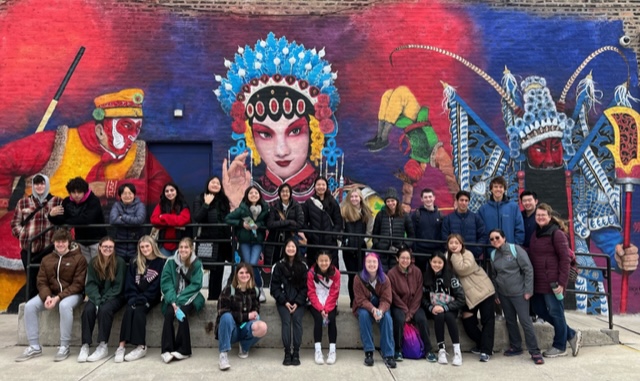
- Helping fund the junior class trip to Chicago’s Chinatown
Frequently Asked Questions
How might being in the Chinese Immersion program be useful in applying to college?
Admissions counselors look to see how students set themselves apart from other candidates.
May parents meet with WMU professors to discuss student progress?
Our Chinese professors will be glad to set up a time to meet to discuss your student. Please ensure your student has signed and returned the Student Information Release Form before contacting their professor.
Professors are legally prohibited from sharing students’ academic records with anyone not authorized on the form. Once signed, this form is valid for the duration of a student’s high school dual enrollment with WMU.
If you need to contact your student’s professor prior to the release form being submitted, have your student email their professor using their WMU email account with the authorized person’s name, contact information, relationship to the student and the information requested on the release form.
Is taking the Chinese AP exam useful for college applications or gaining college credit/placement?
Although the AP exam credit is widely recognized by colleges, it does not always transfer to every college. Moreover, because our students are earning college credits through Western Michigan University, the Chinese AP exam credit would be redundant and unnecessary.
Note: It is not required to take an AP course in order to take the AP exam. However, it is recommended that you take the AP course because the courses are designed to prepare you to pass the exam.
How are standardized proficiency tests (Avant STAMP Test and HSK Test) useful for gaining college credit or placement in Chinese college courses/independent study?
Please see below for Avant STAMP test and ACTFL Ratings information.
What is the Avant STAMP Test?
The Avant STAMP Test measures Chinese proficiency in reading, writing, listening and speaking. For the Chinese Immersion program, FHPS administers the STAMP test to track students’ progress, inform parents, assist improvement of curriculum and instruction, and evaluate the effectiveness of the program overall. The STAMP correlates to the ACTFL standards.
To learn more, see the STAMP Frequently Asked Questions.
Starting in the 2024-2025 school year, the district will be administering the STAMP 4S test to sophomores and juniors in the spring (end of April/beginning May) after their WMU courses have ended. The STAMP 4S test will no longer be automatically administered to seniors. This policy change is supported by data collected from the current and past senior classes.
Current seniors who would like to voluntarily take the STAMP 4S test to try to qualify for the Seal of Biliteracy need to register by October 25 to take the November 15, 2024 STAMP 4S test. A $20 fee will be charged.
For more information, see page 3 in the STAMP Testing Guidelines for Chinese Immersion students.
Why are the ACTFL Proficiency Guidelines & Ratings significant?
ACTFL ratings are designed for use in academic, government and business settings, such as on school and job applications.
- Examples of “How to List Language Skills on a Resume or CV” when applying for a job or graduate school program
- Examples of “ACTFL Ratings and their Prospective Careers”
“The current ACTFL assessments and rating guidelines are the products of more than 50 years of research, development and application within the U.S. government and academia. The validity and reliability of ACTFL assessments and the ACTFL rating scales are supported by published research studies presented annually at professional conferences worldwide.
“ACTFL assessments and ratings are recognized by the members of the federal Interagency Language Roundtable (ILR) and recommended for credit by the American Council on Education (ACE). Due to ACTFL’s strict adherence to test development guidelines, research and testing best practices, ACTFL ratings have emerged as a standard measure of language proficiency in the U.S.” – Language Testing International
What is the HSK Test?
The HSK Proficiency Test is a standardized proficiency test for non-native Chinese learners. It is administered by the Chinese government to measure language abilities in listening, reading and writing, but not speaking. According the Western Michigan University, the HSK is useful for studying or working in China.
For more information, see 5 Top Reasons to Take the HSK Test (Chinese Proficiency Test).
What is the Michigan Seal of Biliteracy?
The Seal of Biliteracy is an award earned by graduating seniors from the Michigan Department of Education in recognition of attaining Mandarin language proficiency requirements. It is designed to highlight to colleges and employers a student’s high level of literacy in a language other than English.
For more information:
How is the Michigan Seal of Biliteracy useful for college applications or gaining college credit/placement?
Because the Michigan Seal of Biliteracy was established in 2018, it is not yet as well known and is still gaining traction. However, other states have adopted their own Seals of Biliteracy since 2011. Information about the maturity of Seals of Biliteracy in other states is at The Seal of Biliteracy.
Note: Some colleges offer credit for the Seal of Biliteracy so it is worth asking a college about it.
How is a Chinese Immersion Endorsement on my transcript and diploma useful for college applications or gaining college credit/placement?
These endorsements are additional evidence of students’ 13-year language-learning journey through the FHPS Mandarin Chinese Immersion program.
What is the FHPS Mandarin Chinese Immersion Program Profile?
The FHPS Mandarin Chinese Immersion Program Profile provides an overview of the Chinese Immersion student experience, the history of the program, the quality of language instruction, the stages of the program (including the Forest Hills Northern/Western Michigan University dual enrollment program) and achievement of the Michigan Seal of Biliteracy, as well as the language proficiency of program graduates, according to ACTFL standards.
How is the FHPS Mandarin Chinese Immersion Program Profile useful for college applications or gaining college credit/placement?
Use the FHPS Mandarin Chinese Immersion Program Profile to validate the quality and longevity of the FHPS Chinese Immersion program, along with the Michigan Seal of Biliteracy, ACTFL ratings, HSK score and the endorsement on the Forest Hills Northern transcript.
It could also be included with any written or in-person inquiries to a college’s Chinese department for gaining college credit.
It is recommended that the Chinese Immersion profile be used when applying to colleges. There is not a place to upload the profile in the Common Application, so students should mention it in their application materials. There is a school profile that accompanies student applications, and it does mention the Chinese Immersion program, but in the context of the entire school.
What further courses are needed to obtain a Chinese major from WMU?
At this time, Western Michigan University does not offer a Chinese major. WMU has recently submitted an application to offer a Chinese major. Based on this application, it’s possible students who attend WMU may be able to extend their Chinese minor to a Chinese major.
For a “guesstimate” of what may be required for a Chinese major from WMU, refer to the requirements for a Japanese major.
How can students request their WMU transcript?
Seniors applying to colleges can order official WMU transcripts to be sent electronically to colleges via Parchment. The cost is $7.50 per order.
How can we learn more about summer camp in China for high school students?
WMU, in partnership with the Beijing Language & Culture University, is organizing a 2-week summer camp in China for 2025. More details will be available during an informational meeting in January.
In 2024, 19 Forest Hills Northern students joined students from Greenville and Kalamazoo for this educational and cultural camp.
Students interested in this opportunity need to obtain a passport that is valid through the end of December 2025 by no later than January 2025. It can take 2 to 3 months to receive a passport, so apply as soon as possible with the U.S. State Department.
 Mandarin Chinese Immersion: Forest Hills Public Schools